How to Transform Your Kitchen With These 9 Kitchen Island Ideas
A modern kitchen island can transform your home by adding storage, defining work zones, and creating a natural gathering spot for family and guests. Designers favour islands because they balance function and form: they organize workflow, showcase materials, and create flexible seating and entertaining areas that suit diverse lifestyles.
Key takeaways:
• Islands create clear work zones, extra storage, and social seating.
• Choose durable materials like quartz and sealed marble to suit a hot and humid climate.
• Since scale and circulation matter, allow at least 42-48 inches around the island.
• Mix finishes (metal, wood, stone) to match your home’s luxe interiors.
We bring you nine designer-approved kitchen island ideas that balance beauty and practicality to help you transform your kitchen into a space that’s both useful and welcoming.
Why Choose A White Counter With Black Millwork?
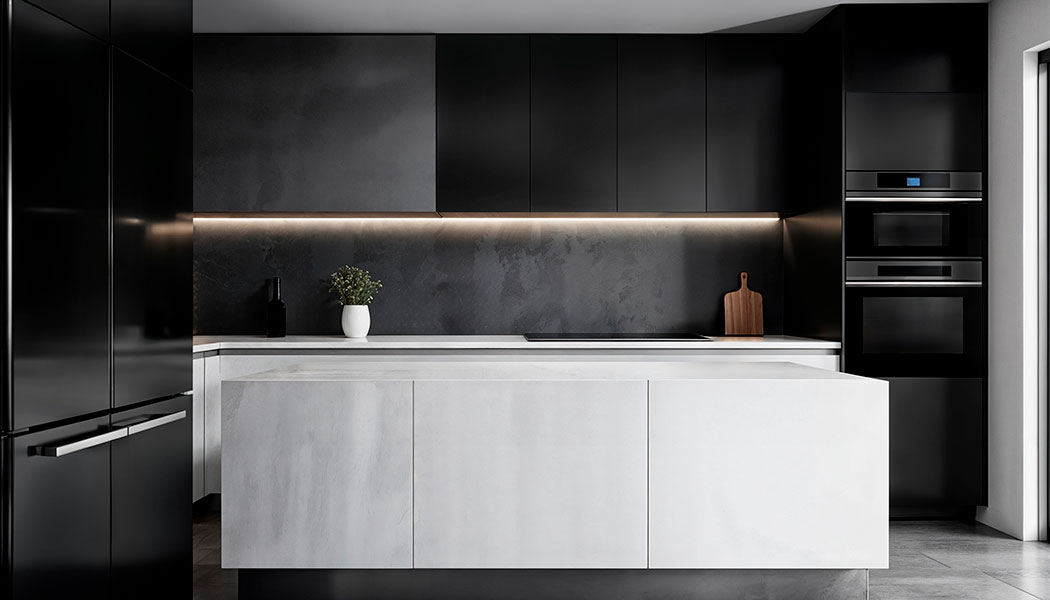
A white countertop brightens the kitchen and reflects light, while black millwork adds modern contrast and a solid, grounding element that anchors the room. Designers use matte black or charcoal for cabinetry to create a refined, contemporary look that goes well for both villas and apartments.
This white-black combo is low‑fuss and photographs beautifully for entertaining. Based on projects completed in Dubai villas, we suggest pairing with warm brass or wood accents to soften the palette and add hospitality.
When Should You Pick A Two-Tiered Island?

A two‑tiered island separates food prep and dining zones, making it ideal for those who love socialising and entertaining guests. The lower work surface is used for cooking and the raised section for casual dining or bar seating, or vice versa.
Designers advise this format to manage sightlines during entertaining and to provide comfortable bar seating without compromising workspace.
Who Benefits From A Double Island Layout?

Double islands create distinct workstations – one for cooking and storage, the other for dining or homework, making them perfect for large homes and multi‑use kitchens. This layout supports simultaneous tasks and large‑scale entertaining.
When choosing this layout, you need to choose the materials carefully across both islands for cohesion. Designers suggest reserving one island for heavy prep while using the other as a social hub.
What Are The Benefits of a Waterfall Edge Island?

A waterfall edge wraps the countertop down the sides for a seamless, sculptural silhouette that highlights premium materials like marble or quartz. This look enhances the kitchen’s design, simplifies cleaning, and is ideal for open‑plan homes where the island anchors the living space.
From our experience working with luxury homeowners, we have seen that clients love a waterfall edge island’s clean lines and material continuity. You can use it to showcase a single slab or engineered stone for a luxe, modern statement.
Why Pair Lacquered Cabinets With Quartz Counters?

High‑gloss lacquered cabinets paired with quartz counters deliver a striking, low‑maintenance look that resists heat and staining, offering a practical solution for your kitchen. Quartz offers consistent veining and easy care, while lacquer adds colour and sheen.
Designers recommend bold colours or jewel tones paired with brass or matte black hardware to create a polished, contemporary aesthetic that stands up to daily use.
What Makes A White Countertop With Dark Brown Base Timeless?

A white countertop keeps the palette fresh and modern, while the dark brown base grounds the room and adds warmth to it. This classic contrast suits both contemporary and transitional interiors. With a durable finish, you can help the island withstand frequent use.
Designers prefer this white-brown pairing to balance brightness with richness. To improve task visibility and emphasize the contrast, you may consider adding under-the-counter or under-the-cabinet lighting.
How To Create A Luxe Countertop By Combining White And Gold?

White cabinetry with gold accents makes your space look bright and glamorous while giving your kitchen island a visual appeal that resonates with your luxe sensibility. Designers suggest limiting the use of gold to hardware and lighting, which helps maintain elegance and avoid overpowering the space.
This white-and-gold pairing is timeless and helps your photographs look aesthetic when entertaining, making it a popular choice for showpiece kitchens.
When Is A Table‑Style Island The Best Choice?

A table‑style island that allows seating on both sides blurs the line between dining and prep, making it ideal for casual breakfasts and flexible entertaining in compact homes. It’s visually lighter and easy to adapt to different uses.
Interior designers recommend using durable tabletop materials and planning a comfortable seating arrangement to ensure the island functions as a daily gathering spot.
Who Can Benefit From The Mobile Island?

A mobile kitchen island, built on lockable casters or wheels, offers unmatched flexibility, making it ideal for apartments, smaller kitchens, or multipurpose spaces. Designers love this option because it can be moved to create extra prep space when cooking, then tucked away to free up movement.
Families who entertain often, renters who want non‑permanent solutions, and homeowners with compact layouts benefit most from the mobile kitchen island. It adapts to changing needs, proving that mobility can be just as stylish and practical as fixed island designs.
Quick Comparison: Kitchen Island Styles At A Glance
| Style | Best For | Material | Maintenance |
| White Counter + Black Millwork | Contrast, modern homes | Marble/Quartz + Wood | Low-medium |
| Two-Tiered Island | Food prep + entertaining | Mixed materials | Medium |
| Double Island | Large homes / Multi‑use kitchens | Mixed materials | Medium-high |
| Waterfall Edge | Seamless, sculptural silhouette | Marble/Quartz | Low-medium |
| Lacquered Cabinets + Quartz Counters | High‑gloss look, low maintenance | MDF/Wood + Quartz | Low |
| White Counter + Dark Brown Base | Classic contrast, timeless appeal | Marble/Quartz + Wood | Low-medium |
| White And Gold | Glamorous kitchens | Painted wood + metal | Medium |
| Table‑Style | Casual, small spaces | Wood or stone top | Low-medium |
| Mobile Island | Apartments, smaller kitchens, multipurpose spaces | Wood/Metal with casters or wheels | Low |
Practical examples and local notes
- In Luxe Dubai Villa, double islands work well in open layouts designed to host large gatherings.
- Apartments in Jumeirah with small kitchens can benefit from a waterfall edge or table‑style island that blends style with functionality.
- From our experience working with UAE homeowners, we suggest choosing sealed quartz or treated marble to handle heat, humidity, and frequent entertaining.
Kitchen Island FAQ
Q: How much clearance do I need around an island?
A: Allow at least 42-48 inches on all sides for comfortable movement and appliance access.
Q: Is marble a practical choice for Dubai kitchens?
A: Yes, if sealed and maintained. You can use quartz as a lower‑maintenance alternative with similar visual impact.
Q: What materials are best for kitchen islands in hot climates like Dubai?
A: Sealed marble, quartz, and durable hardwoods that perform best under heat and humidity are the best choices.
Q: Do kitchen islands add value to a home in UAE’s property market?
A: Yes, well‑designed islands increase functionality and appeal, often boosting your property’s resale value.
Q: How long does it take to install a custom kitchen island?
A: Installation usually takes 2–8 weeks depending on design complexity, material availability, site prep, manufacturer schedules, and fabrication time.
Thinking about adding a kitchen island to your UAE home?
Take time to consider your layout, lifestyle, and materials before making a decision. Consulting with an experienced designer early can help you avoid costly mistakes and ensure your island becomes a functional, welcoming centrepiece rather than an afterthought.
Check out our bespoke kitchen island solutions now!